
Name the trigger without disguising it
With a discounted insulated bottle, “I like this colour” and “I need a way to carry drinks” are different statements. Both can be honest, but the second lets you check whether an existing bottle already works.
Close the promotion and describe how you would use the item. If the remaining explanation is only the old price or other people's excitement, you still need information about your own use.
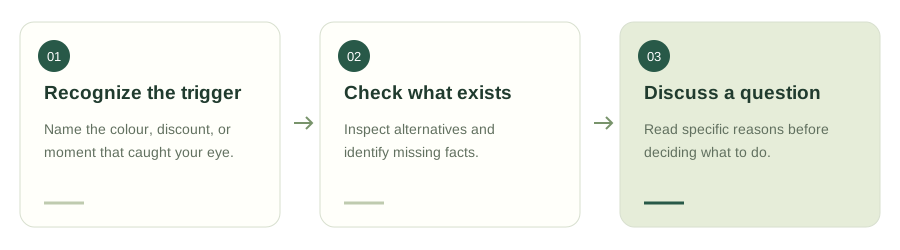
- Recognize the triggerName the colour, discount, or moment that caught your eye.
- Check what existsInspect alternatives and identify missing facts.
- Discuss a questionRead specific reasons before deciding what to do.
Check duplicates in the real world
Look in the cupboard rather than relying on memory. Check existing bottles for capacity, condition, and actual use. If one already does the job, keeping it belongs in your comparison as a serious alternative.
If you need another bottle, verify its capacity, lid design, and cleaning instructions. The deadline describes a price window; it does not establish that this model fits your daily routine.
Ask about missing evidence, not permission
In Walletwait, add the item, price, currency, and an honest explanation of what caught your attention. “I love the colour” gives readers clearer context than presenting every desire as an unavoidable need.
Ask whether your existing bottle serves the same purpose. Read approval and rejection reasons, then choose whether to buy, check the dimensions, compare cleaning steps, or let this particular offer pass.
When an offer feels urgent
Tick these prompts as you think. Your choices stay on this page and are not saved or sent.
Two ways to look at the same purchase
A reason to support it
A genuine carrying problem could support choosing a suitable replacement.
A reason to reconsider
A discount does not establish a need for a duplicate.
The example applicant finds a suitable existing bottle and passes on the sale.
Questions you might have
Must every unplanned purchase be rejected?
No. Check its purpose and conditions before deciding whether it suits you.
Will Walletwait block checkout?
No. It supports discussion, not automatic payment interception.
What if the offer expires?
Consider that alongside the missing information. A deadline alone is not evidence of suitability.