
Use one task to set the scope
Narrow “I want a tablet” to “I want to read and annotate course handouts.” Professional drawing, gaming, and video editing need not enter this comparison unless you actually expect to use those features.
Ask the same questions of every option: Can it open the files? Can you export your annotations? Is it comfortable to carry? Avoid listing only benefits for your favorite and only drawbacks for everything else.
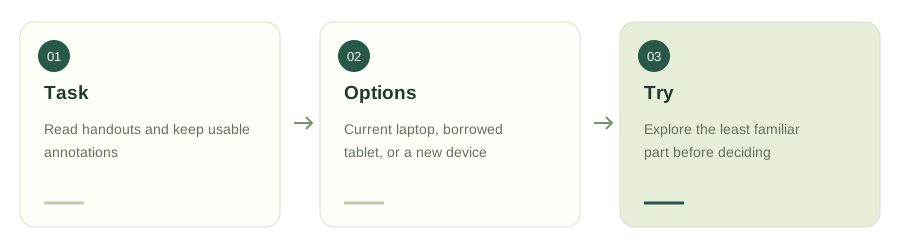
- TaskRead handouts and keep usable annotations
- OptionsCurrent laptop, borrowed tablet, or a new device
- TryExplore the least familiar part before deciding
Include the extra steps
The listed price may not cover everything you need to get started. An input tool, a case, charging arrangements, or moving existing files could affect the experience. List the extras you would actually use.
Borrowing has conditions too, such as limited availability or time spent learning the controls. Keeping an old device may require a different routine. Describe these limits instead of presenting any option as entirely effortless.
Discuss the biggest unknown
You may know the specifications but still be unsure whether handwriting on a screen suits you. Put that uncertainty in your Walletwait request. “Use my laptop for one more week, then borrow a tablet” gives reviewers something concrete to consider.
Ask for opinions about the same study situation, then decide which limitations you can accept. The aim is a workable choice for your current task, rather than a universal winner among devices.
Ask every option the same questions
Tick these prompts as you think. Your choices stay on this page and are not saved or sent.
Two ways to look at the same purchase
A reason to support it
Portability could be useful if annotation is a daily task.
A reason to reconsider
Try writing and exporting files before choosing a device.
In this example, the applicant decides to borrow a tablet before buying.
Questions you might have
Is the cheapest option always better?
No. Consider whether it performs the task and whether you can accept its practical limitations.
Can waiting be an alternative?
Yes. Explain how you will handle the task while waiting and when you plan to reconsider.
Does Walletwait compare specifications automatically?
No. You supply the purchase context and alternatives. Other participants offer opinions based on the information you provide.