
Keep four simple fields
Use paper or your usual notes app to record the item, intended use, available alternative, and when to revisit it. If you note a price, include the date so an old impression does not become a current assumption.
For a stand mixer, write: “Try bread-making on weekends; use my existing tools first; reconsider after several attempts.” When you return to the list, you can examine changed experience instead of only seeing an attractive picture again.
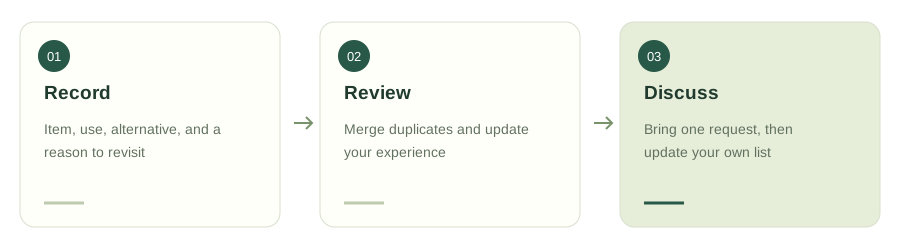
- RecordItem, use, alternative, and a reason to revisit
- ReviewMerge duplicates and update your experience
- DiscussBring one request, then update your own list
Organize by the question you have now
You might separate near-term uses, ideas still being explored, and things you simply like. Adjust these categories yourself without forcing every wish into a score. Losing interest can be a useful result of reviewing the list.
For several similar items, keep the one with the clearest purpose. Three saved cups may represent one wish, not three needs. Putting something on the list does not require setting a date to buy it.
Bring one worthwhile question to discussion
Walletwait provides purchase requests and discussion, rather than a dedicated wishlist manager. Keep the overall list wherever you prefer, then bring an important item across with its price, reason, and alternative for a focused discussion.
Group or public-square feedback may suggest borrowing first or observing how often you use an existing item. Afterwards, update your own list. A vote about one request does not need to determine every other wish.
Four actions for your next wishlist review
Tick these prompts as you think. Your choices stay on this page and are not saved or sent.
Two ways to look at the same purchase
A reason to support it
Regular use would give you a reason to compare capacity and cleaning.
A reason to reconsider
First see whether you enjoy the whole process.
The applicant in this example keeps the idea in personal notes and tries baking again.
Questions you might have
Does Walletwait have a dedicated wishlist?
This guide describes a manual method. Keep your list in your own notes and use Walletwait for individual purchase discussions.
Should I submit every saved item?
No. Choose a purchase you are genuinely unsure about and can explain clearly. Keep ordinary notes on your own list.
Is an unbought wish a failed plan?
No. Changing interests, uses, and alternatives can make an item unnecessary. A wishlist is not a commitment to buy.